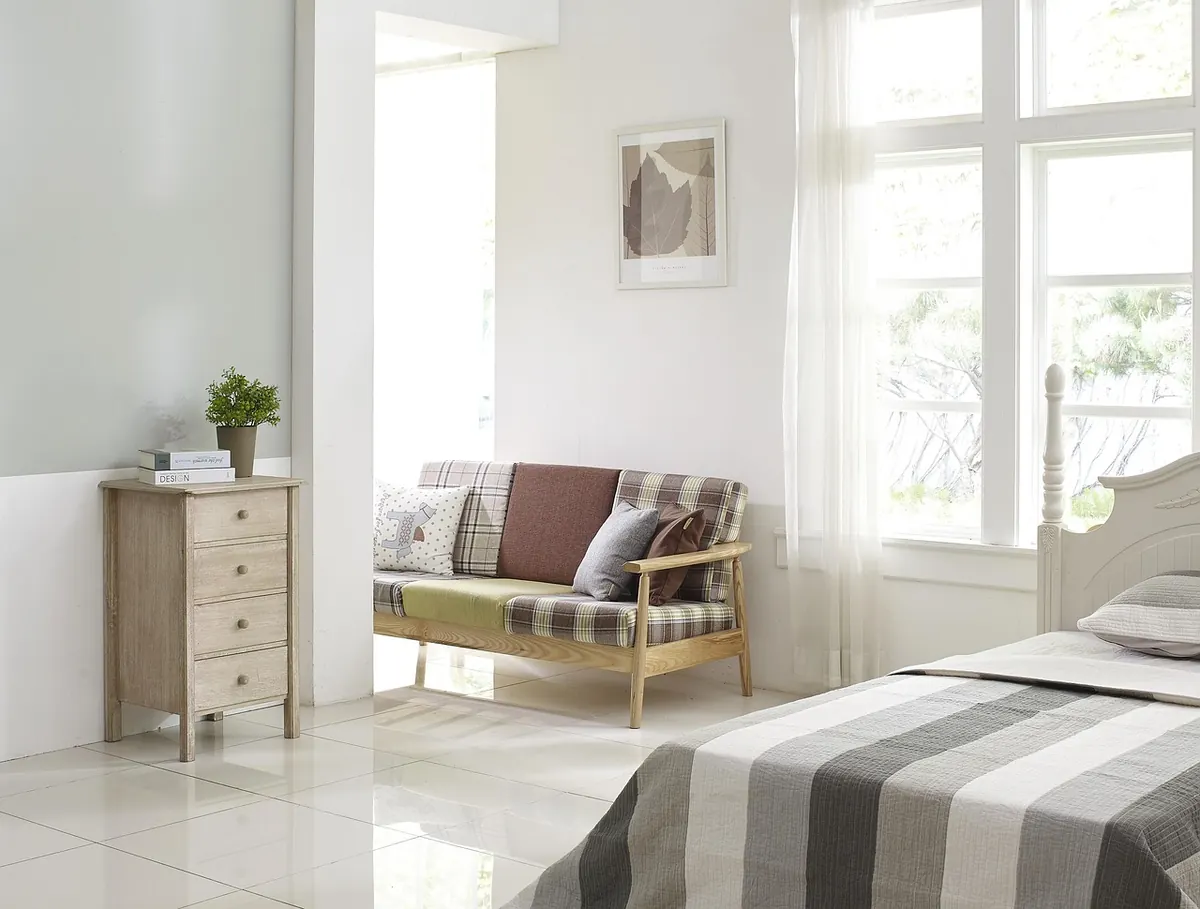
Every living room has one. The corner behind the door, the one beside the sofa, the one holding a lamp with no shade, a pile of post you keep meaning to deal with, and a chair nobody quite sits in. Corners are the easiest part of a home to ignore and the easiest to fix. You don't need a bigger room or a spare weekend. You need fifteen small decisions made on purpose, and an hour to act on them.
Start With the Corner Itself
1. Pick the corner that's already half-working. The best cosy corner isn't the largest. It's the one with a solid wall behind it, a socket within reach and a bit of daylight. A corner wedged between a bookshelf and a window will always beat an open space in the middle of a room, because it has edges — and enclosure is most of what "cosy" actually means.
2. Empty it completely. Take everything out, including the things you've stopped seeing. Then stand back. Which side does the light come from? Is there a draught? Will the radiator roast whoever sits there? Five minutes of emptiness tells you more than an hour of rearranging things that were never going to work.
Layer the Textures
3. Anchor the space with a rug. A rug is the difference between furniture that happens to be in a corner and a corner that feels like a room of its own. It doesn't need to fill the floor — it needs to be big enough for the front feet of your chair to rest on, so the chair reads as sitting inside the space rather than floating beside it. Pile is warmer underfoot; flatweave is easier to keep clean.
4. Keep one throw within arm's reach. Not folded on a shelf until December. Draped over the back of the chair or rolled into a basket beside it, so you can reach it without standing up. Wool, brushed cotton and chunky knits all work, and a light cotton blanket earns its place in summer when wool is too much.
5. Mix at least three cushion textures. Texture does the heavy lifting here, not pattern. Smooth linen, nubbly bouclé, velvet, woven wool, corduroy — put a few together and the corner feels layered even in a plain colour scheme.
- Good combinations: linen with velvet and a wool knit; bouclé with cotton and corduroy.
- Keep the palette tight: three shades from the same family read calmer than three bold contrasts.
- Restrain the count: three on a single armchair is plenty, or you'll be shifting them every time you sit down.
Get the Lighting Layered
6. Use three light sources, and only one overhead. Overhead light flattens a room and makes corners feel like the edges of a stage. A cosy corner wants a floor or wall light for general glow, a table lamp at roughly shoulder height for reading, and something low and ambient — a small lamp on the floor, a short run of warm bulbs behind a shelf, or a couple of candles. Switch the big light off and see what happens.
7. Choose warm bulbs. Read the box before you buy. You want around 2700K, which is a warm white, and ideally a dimmable bulb. Much above 3000K starts to feel like a waiting room, and the difference between a corner you want to sit in and one you don't is often just the bulb.
8. Put the corner on a dimmer or a smart plug. An in-line dimmer switch takes a couple of minutes to fit and changes how the whole corner feels after dark. If you'd rather not touch the wiring, a smart plug you control from your phone does most of the same job.
Scent, Sound and Air
9. Choose one scent and stay with it. A single scent becomes a signal: this is where I read, or where I have my first coffee. Two or three at once just smells like a shop. A candle, a reed diffuser, a wax melt or a pan of citrus peel and cloves on the hob all work — pick one and don't rotate it weekly. Then ventilate. Crack a window for ten minutes before you settle in, because a scented candle in a sealed room stops being pleasant quite quickly.
10. Add a low sound. Not the television, which pulls your attention sideways. A radio, a record player, or a small speaker with a playlist you don't have to think about. Sound separates the corner from the rest of the house more effectively than any amount of cushion arranging.
Seating That Earns Its Place
11. Sit in the chair before you commit to it. This is the point people skip, and it matters most. Whatever you choose — an armchair, a wingback, a rocking chair, a wide reading chair, a good secondhand find — the test is whether it holds you up or you have to hold yourself up. Feet flat or on a footstool, forearms supported, lower back supported. If you sink in and struggle to get out, it's a decorative chair, not a reading chair.
12. Add a footstool or pouffe. Small change, big difference. Raising your feet takes the load off your lower back and lets you stay put for a whole chapter instead of twenty minutes. A pouffe with a lid doubles as storage for the throw and the spare cushions.
13. Put a table at elbow height. Not knee height, where you have to reach down, and not shoulder height, where you knock things over. Elbow height, wide enough for a mug, a book and a lamp. A small side table or a wooden stool with a tray on top is ideal.
Details That Actually Get Used
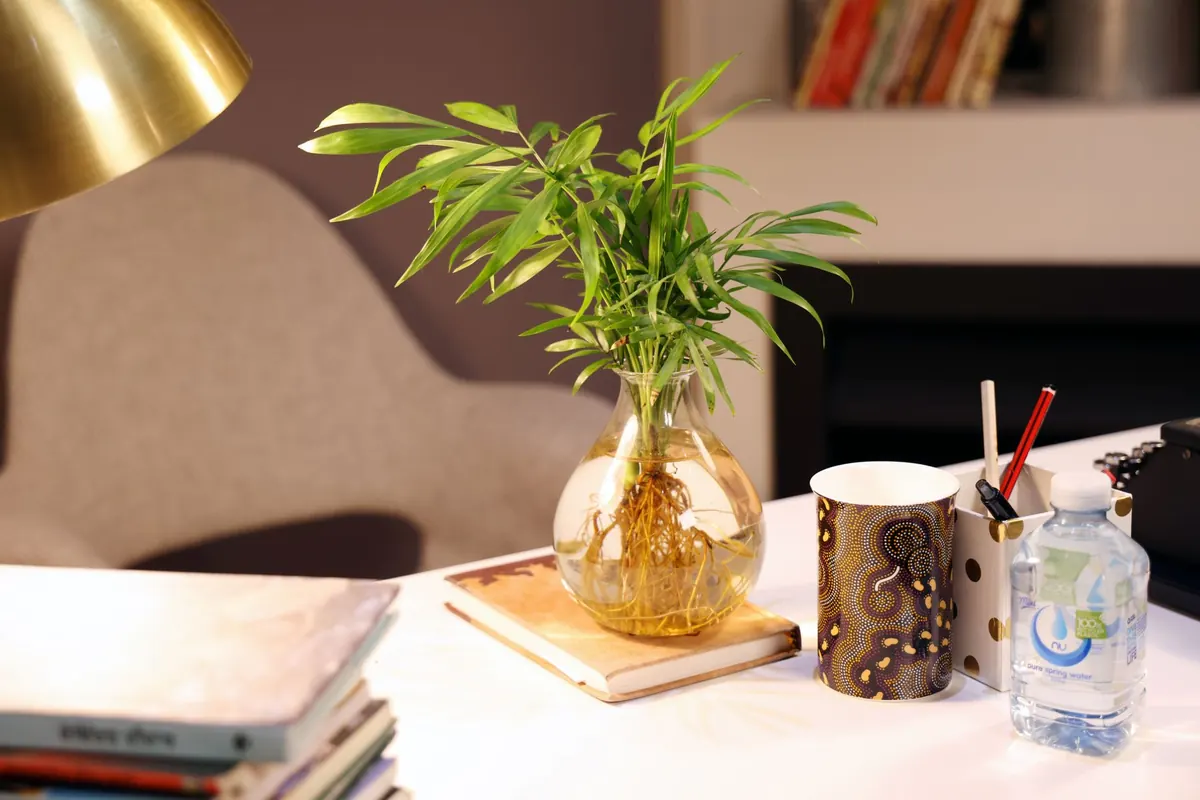
14. Add something alive. A plant softens hard edges and gives the corner something to breathe with. Match it to the light you have: snake plants and pothos cope with a dim corner, ferns want brightness, and anything needing direct sun will sulk by a north-facing wall. Read the label rather than guessing.
15. Give the corner a job. This is what separates a styled corner from a used one. Corners with a purpose — morning coffee, evening reading, phone calls, knitting, a j
Photo: Ivan S / Pexels