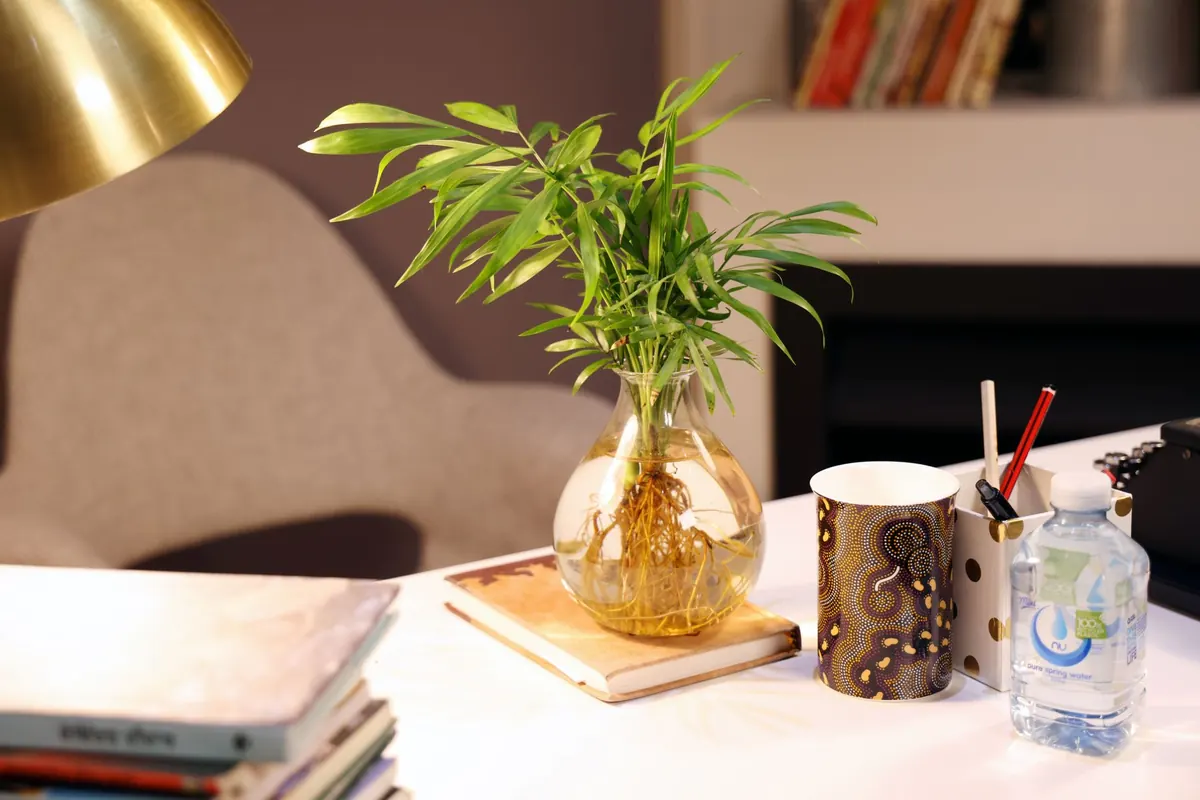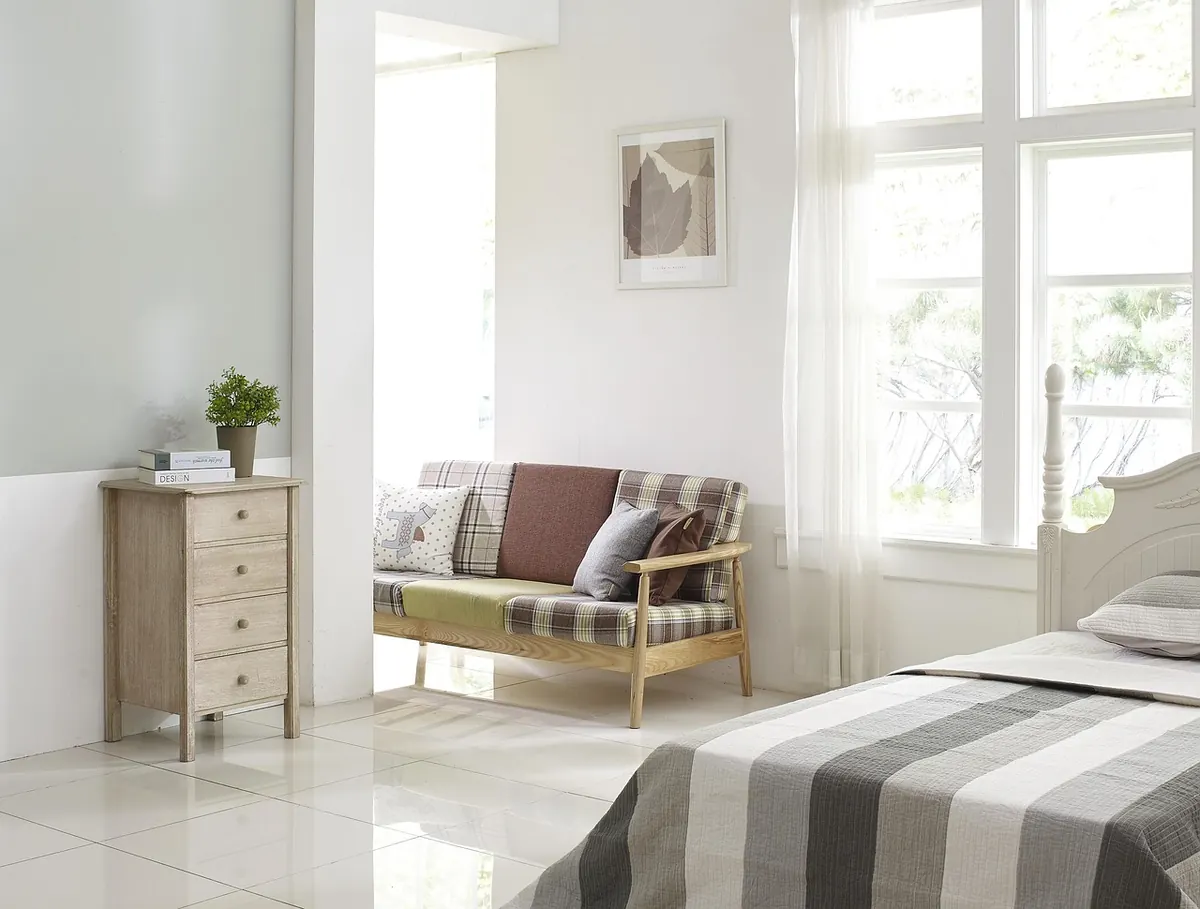
There is a particular pleasure in a Saturday spent drifting between charity shops: the smell of old paperbacks, the rattle of a display cabinet, a lamp with a shade so wrong it is almost right. Nothing on the shelf matches anything else. That is the point. A cosy room is rarely bought in one trip to one shop. It accumulates, piece by piece, and second-hand finds bring texture and history that new things struggle to imitate.
It also costs a fraction of what you would pay on the high street. The skill is knowing what to pick up, what to put back, and which small flaws are worth living with.
Why old things make a room feel warmer
New furniture and accessories tend to arrive uniform: sharp edges, flat colours, the same finish repeated across a thousand living rooms. Second-hand pieces have already softened. Wool has felted slightly, brass has dulled to a honey tone, stoneware has a glaze with depth rather than shine.
That variation is what makes a room feel lived in rather than staged. A mismatched pair of lamps, a jug holding dried stems, a blanket over the arm of a chair: each adds a small layer. Charity shops are unusually good at supplying those layers, because they receive the things people have actually used in their homes.
Textiles first: throws, blankets and cushions
If you only have a tenner and twenty minutes, head for the textile rail. A throw changes how a sofa reads, how a bed looks in the morning, how warm an evening feels. Look for weight in the fabric, not just softness.
What to look for on the label
- Pure wool or lambswool: warm, resilient, and beautiful when it ages. Check for moth holes along folded edges and in creases.
- Cotton and linen: excellent for cushions, tablecloths and lighter summer throws. They crease, and that is part of the charm.
- Mohair and alpaca blends: soft and light, often surprisingly cheap second-hand. Hold them up to the light to spot thin patches.
- Heavy synthetics: fine for a picnic blanket, less good for a room you want to feel warm. They tend to pill and hold static.
Give everything a proper look: seams, zips, the corners where wear hides. A small darn is easy to live with. A musty smell that survives a wash, or a damp, clammy feel, is not. Wash according to the label, dry wool flat and out of direct sun, and store clean textiles in a cotton bag rather than a sealed plastic one.
Lighting: the quickest way to warm a room
Nothing transforms a room faster than a second lamp. One overhead light makes everything look like a waiting room; two or three pools of lower light make it look like somewhere you would sit with a book.
In charity shops, look past a tatty shade to the base underneath. Brass, turned wood, glazed ceramic and heavy stone bases turn up regularly, often for the price of a sandwich. Shades are easy and cheap to replace, so a plain drum or pleated shade in cream or oatmeal can finish a whole room's lighting for very little.
Be strict about electrics. Check the flex for cracks, kinks or exposed inner wires, and the plug for a cracked case. Ring the cord gently and look at where it enters the base. If a lamp is old, or something feels loose, have it checked or rewired by a qualified electrician before you use it. A warm white bulb, around 2700K, will do more for the atmosphere than any lampshade.
Ceramics and the joy of odd pieces
This is where charity shops beat almost anywhere else. A single handsome stoneware jug, a deep bowl for fruit, a small pot for a spoon: used every day and never quite matched to anything.
Turn pieces over and check the base for hairline cracks, and run a thumb around the rim for chips. Crazing, the fine web of lines in an old glaze, is common and often harmless in a decorative piece. Be more careful with anything you plan to eat or drink from. Older glazes may contain lead, so if a piece is chipped, worn or crazed, keep it for display rather than for serving food, and use food-safe modern pieces for anything that touches a meal.
How to work a charity shop properly
- Go often, and go early. Stock turns over fast, and donations land throughout the day rather than at opening.
- Talk to the volunteers. Describe what you are after. Many will keep an eye out, and they know what has just come in.
- Check the whole shop. The best lamp is often behind a rail of coats, and the ceramics are frequently on a shelf near the till.
- Carry a tape measure. Note the measurements you actually need at home, in your phone, and use them.
- Take a tote bag. It saves you juggling a heavy ceramic bowl and a book.
- Be ready to walk away. If it does not fit, or the flaw bothers you now, it will bother you more at home.
- Do not haggle. The price is already for charity, and most shops only discount at a marked sale rail.
Small fixes that make a find look deliberate
- Swap the shade, keep the base. A cream linen shade flatters almost any lamp.
- Fold throws in three and lay them along a chair arm rather than draping them loosely.
- Group odd ceramics by colour, not by set. Three cream jugs read as a collection.
- Use a chipped mug as a pen pot, or a jug as a plant pot with a saucer underneath.
- Repaint a frame in a matt colour. Do this outdoors or with the windows open, and let it dry fully before bringing it inside.
- Sew a simple hem on a too-long curtain rather than pinning it. Even a rough stitch is invisible from a sofa.
Building the room slowly
Set yourself a small monthly budget and a rule of one or two pieces per trip. Keep a running list on your phone of the specific things you are short of: a bedside lamp, a cushion, a deep bowl. A list stops you buying things you like in principle and have nowhere to put.
Expect to wait. The right piece turns up because you kept looking, not because you spent more. In the meantime, clean what you buy, fix what is fixable, and live with it for a week before deciding where it belongs. Rooms that feel genuinely cosy are rarely assembled in an afternoon. They gather, and charity shops are the best place to let that happen.
Photo: Julia M Cameron / Pexels