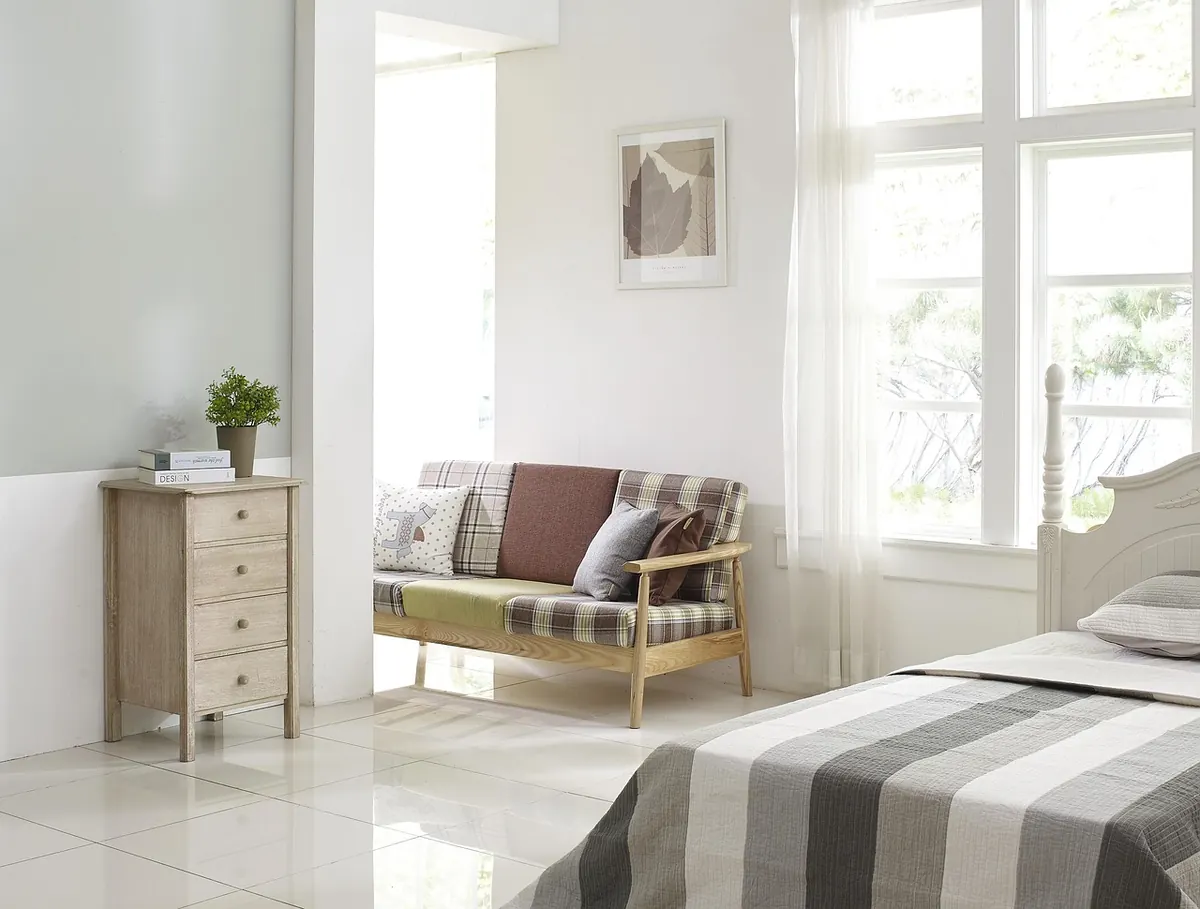
Most home work corners don't fail loudly. They fail quietly: a chair that slowly collects jumpers, a desk hidden under post, a corner of the lounge you start avoiding by Wednesday afternoon. The fix isn't a bigger room or a matching furniture set. It's a short list of decisions about where you sit, what you keep within reach, and how you close the whole thing down when you finish. Done once, properly, a calm corner takes an afternoon to set up and about five minutes a day to keep.
Pick a corner, not a room
A spare room is lovely, but it isn't the point. The best home work corners are edges: under a window, beside a chimney breast, the far end of a dining table, the awkward space at the top of the stairs that's too small for anything else. A desk around a metre wide is plenty for a laptop, a notebook and a mug.
Think about which way you'll face. Sitting with your back to the room and looking at a wall or a window feels calmer than staring into the middle of the house, where the laundry basket lives and everyone else passes through. If you share your home, choose somewhere you can leave mid-task without it being in the way — a kitchen table is fine if you clear it before dinner.
One caution: don't face a completely blank wall if you can help it. A shelf, a print, a window or even a decent view of a plant stops the corner feeling like a cell. And if the only option is the bedroom, try to use a small table you can clear, or a tray you pack away, so the room stays associated with rest rather than deadlines.
Get the light right before you buy anything
Light does more for a small corner than furniture ever will. Daylight from the side is easiest on the eyes — behind you it reflects off the screen, directly in front it leaves you squinting into your own shadow. If you're on video calls, put the main light source in front of you and a smaller lamp behind, and you'll look considerably less like a silhouette.
A desk lamp with a warm bulb, positioned at roughly eye level or below, lights the work rather than your face. Ceiling lights tend to be harsher and cooler, which is fine for hoovering and less fine for an evening of emails. Try using the lamp alone after dark and see how different the corner feels.
Then deal with the cables. A pale wall with a black cable snaking across it is the single biggest thing that makes a tidy desk look untidy. A clip, a short cable tidy or a small box behind the desk takes ten minutes and fixes most of it.
The desk surface is for today's work only
This is the rule that keeps everything else working. The top of the desk holds what you'll actually touch today; everything else has a home somewhere else. If an object hasn't been moved in a fortnight, it belongs in a drawer, a box or on a shelf.
In practice, that usually means:
- A laptop and its charger, with the cable routed behind rather than across the desk
- One notebook and one pen — not a jar of eleven pens
- A mug or glass, which leaves at the end of the day
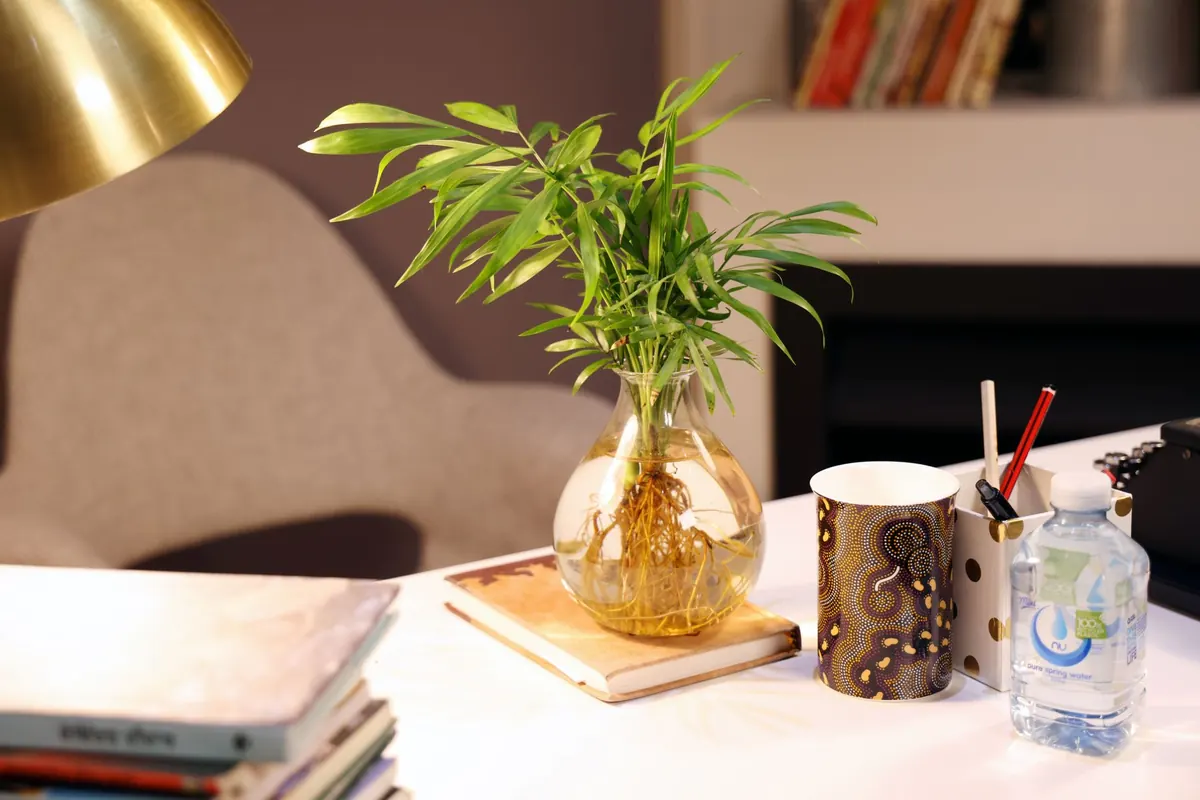
- One thing you genuinely like looking at: a small plant, a stone from a beach, a photograph
Notice what's missing: the pile of post, the spare keyboard, the tangle of adaptors, the stack of books you mean to read. None of those are bad things; they're just not today's work. A single tray beside the desk can hold papers that need dealing with this week, and anything older than that gets filed or binned.
Give clutter somewhere to land
Calm corners aren't empty, they're just decided. A lidded box, a woven basket or one dedicated drawer absorbs the odds and ends that would otherwise drift onto the desk: chargers, headphones, receipts, a hairband, three pens that all work.
Go upwards if floor space is tight. A single shelf above the desk can hold books, a box and a plant, as long as you resist filling every inch. Space between objects reads as calm; a solid wall of stuff reads as noise, even when it's all neatly arranged.
Cables deserve their own small container — a labelled zip bag or a shallow tin. When you need the travel adaptor in six months, you'll know where it is, and you won't have to excavate a drawer to find it.
Close the office at the end of the day
This is the part beginners skip, and it's the part that matters most. Work doesn't end when you stop typing; it ends when the corner stops looking like work. Five minutes, same order every time, does the job:
- Save and shut down the laptop, or close the lid if you leave it running
- Put the notebook and pen in their drawer or box
- Take the mug to the kitchen — don't leave it as tomorrow's first job
- Slide loose papers into the tray, and recycle anything you've finished with
- Wipe the surface if it needs it, then straighten the lamp and chair
- Switch the lamp off, and leave the corner in daylight or dim light rather than bright white
If your desk lives in a shared room, add one more step: cover the setup. A throw over the screen, or a laptop tucked into a drawer, tells your brain the space is off duty. It sounds fussy. It works.
Soften the sound and the edges
Hard, empty corners echo, and echo makes a small space feel frantic. A small rug underfoot, a curtain, a cushion on the chair and a plant or two all absorb a bit of sound and take the sharpness off a bare room. You don't need all of them; one or two will change the feel.
If your chair came from the kitchen table, a folded blanket or a firm cushion behind your lower back helps more than you'd expect. If you're working long days and notice aches that don't settle, it's worth speaking to your GP or a physiotherapist rather than hoping a cushion will sort it out.
Keep the sensory details simple. Quiet background sound, a window you can open, a candle you light only when the laptop closes — small cues that mark the beginning and end of the working day.
Start small, and let good enough be good enough
You don't need to solve the whole house. Do three things this week: clear the desk surface down to today's work, add one warm lamp, and run the five-minute reset every evening for a fortnight. Those three habits do most of the heavy lifting, and they cost very little.
After that, adjust as you go. If the tray keeps overflowing, you need a better filing system, not more willpower. If the corner still feels restless, it's usually light or clutter, not the furniture. And if you slip for a week and the desk disappears under post again, that's normal. Clear it, close it down, and start the next morning with a surface that's yours.
Photo: dp singh Bhullar / Pexels